Creatine & Metabolic Health: Beyond Muscle Gains
Creatine isn’t just for athletes—it supports glucose metabolism, brain function, and stress resilience. Explore new research on dosing, cognition, and metabolic benefits.
By Helsa Health editorial team
Last updated
Introduction
Creatine is famous in the fitness world for enhancing strength and lean mass, but emerging research suggests its effects may extend beyond muscle. From glucose handling to cognition under stress, creatine is being studied as a potential metabolic tool. In this article, we’ll explore the proposed mechanisms, review what the latest high‑dose studies on brain health and stress resilience actually show, and summarize the dosing that expert position stands report. ⚡
💪 What Is Creatine?
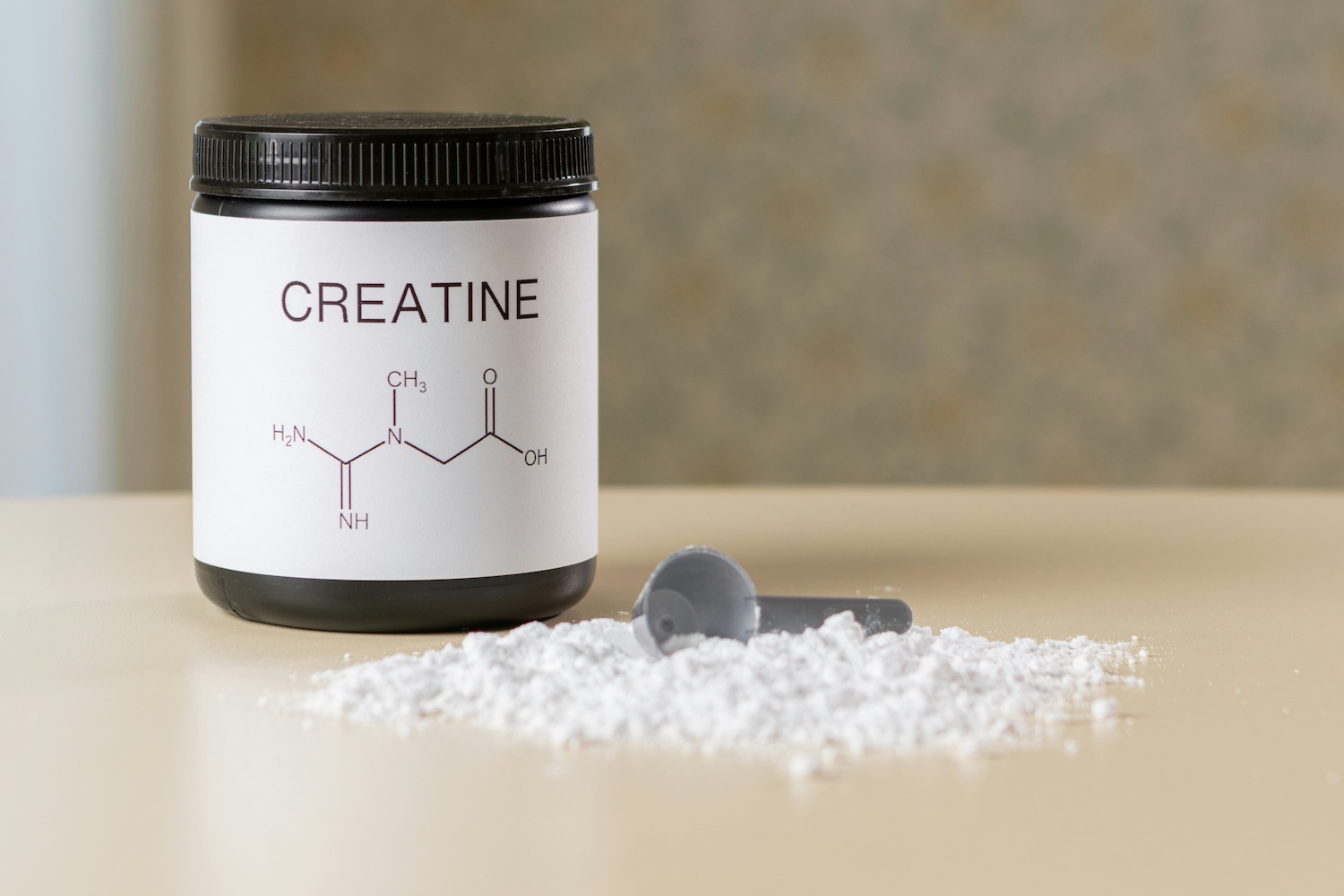
Creatine is a naturally occurring compound—about 95% of it is stored in skeletal muscle—where it helps regenerate ATP, the cell’s primary energy currency. It’s synthesized in the liver and kidneys from amino acids (arginine, glycine, and methionine) and also obtained from meat and fish.[1]
Supplemental creatine monohydrate increases muscle creatine and phosphocreatine stores by 20–40%, fueling short bursts of high‑intensity activity and possibly aiding recovery.
🔬 Creatine & Glucose Metabolism
Beyond exercise, creatine may influence glucose handling. In a 12‑week randomized, double‑blind trial in 25 people with type 2 diabetes, those taking creatine (5 g/day) alongside an exercise program saw HbA1c fall from 7.4% to 6.4%, versus 7.5% to 7.6% with placebo—although standard markers of insulin sensitivity didn’t differ between groups (this study). A 2021 review calls these results promising but notes the benefit has yet to be confirmed in larger trials (this review).
Proposed mechanisms include:
- Enhanced muscle uptake: Combined with exercise, creatine appears to increase GLUT‑4 translocation to the muscle cell membrane, facilitating glucose entry into muscle cells.
- Insulin secretion and glycogen: In lab and animal studies, creatine may stimulate insulin secretion and boost muscle glycogen storage.
- Cell volumization: Water drawn into muscle cells may activate cell‑volume–sensitive signaling linked to glycogen synthesis.
🧠 High‑Dose Creatine for Cognition
Recent trials have explored higher creatine intakes for brain health. In a small double‑blind, randomized crossover trial, 15 healthy young adults given a single high dose (0.35 g/kg—roughly 25 g for a 70 kg adult) during 21 hours of sleep deprivation showed better cognitive performance and processing speed than on placebo (this trial).
Key findings:
- Benefits show up mainly under stress or with age: A systematic review of six RCTs found possible gains in short‑term memory and reasoning, but little change in well‑rested young people (this review).
- Brain energy: Creatine helps buffer ATP in neurons, but supplements raise brain creatine only modestly—generally by about 5–15% (position stand).
- Older adults: A meta‑analysis of RCTs found memory benefits mainly in adults aged 66–76 (this meta‑analysis), and a small, uncontrolled 8‑week pilot of 20 g/day in 20 people with Alzheimer’s disease reported higher brain creatine and better scores on several cognitive tests (this pilot).
😓 Creatine & Stress Resilience
The idea that higher creatine stores blunt the physiological stress response is plausible but largely untested. In a small double‑blind trial, people who took 20 g/day (4×5 g) for 7 days before 24 hours of sleep deprivation had smaller declines in mood, reaction time, and balance than those on placebo—but their cortisol and catecholamine levels didn’t differ (this study). For mood, a 2025 meta‑analysis of 11 trials found a small average improvement in depressive symptoms, with very low certainty of evidence (this review).
Proposed (still largely theoretical) mechanisms:
- Enhanced ATP buffering: May help the brain meet higher energy demands during stress and sleep loss.
- Neurotransmitter modulation: May influence GABAergic activity, though this hasn’t been shown in human trials.
- Antioxidant effects: May reduce stress‑induced oxidative damage in brain tissue, based mainly on lab studies.
📝 Practical Dosing Guidelines
The International Society of Sports Nutrition (ISSN) position stand reports these common protocols (position stand)—general information, not a personal prescription:
- 🔄 Loading phase: About 0.3 g/kg/day (typically 20 g/day as 4×5 g) for 5–7 days to rapidly saturate muscle stores.
- ⚖️ Maintenance phase: 3–5 g/day thereafter (larger athletes may need 5–10 g/day). Skipping the load and taking 3 g/day raises stores more gradually, over about a month.
- 📈 Higher‑dose brain protocols: The studies above used 20 g/day for a week or a single ~0.35 g/kg dose. These are research protocols, not established recommendations.
- 💧 Hydration: A 1–3 kg gain, mostly water, is typical during loading. Research doesn’t show that creatine causes dehydration, but drinking enough fluids is sensible (evidence review).
⚠️ Note: If you have kidney disease or reduced kidney function, talk with your clinician before taking creatine. Creatine can also raise blood creatinine, which can affect how kidney lab results are read.
📲 Track Your Metabolic Gains
Whether you’re aiming for better glucose control, sharper cognition, or stress resilience, tracking your habits alongside your biomarkers is key. A tool like Helsa lets you log meals by photo or voice, analyze your blood markers, and ask an AI health coach questions, with daily reports and a holistic metabolic score—so you can see how your routine lines up with your numbers.
Key Takeaways ✅
- Paired with exercise, creatine may improve blood sugar control—likely via greater GLUT‑4 activity in muscle—but larger trials are needed.
- High doses have improved some cognitive measures during sleep deprivation in small trials; there’s no good evidence that creatine blunts cortisol.
- The ISSN reports that 3–5 g/day maintains muscle creatine stores; brain and metabolic benefits are still being studied.
- If you have kidney disease, talk with your clinician before taking creatine.
References
- Kreider RB et al. “International Society of Sports Nutrition position stand: safety and efficacy of creatine supplementation in exercise, sport, and medicine” (2017)
- Gualano B et al. “Creatine in type 2 diabetes: a randomized, double-blind, placebo-controlled trial” (2011)
- Solis MY, Artioli GG, Gualano B. “Potential of Creatine in Glucose Management and Diabetes” (2021)
- Gordji-Nejad A et al. “Single dose creatine improves cognitive performance and induces changes in cerebral high energy phosphates during sleep deprivation” (2024)
- Avgerinos KI et al. “Effects of creatine supplementation on cognitive function of healthy individuals: A systematic review of randomized controlled trials” (2018)
- Prokopidis K et al. “Effects of creatine supplementation on memory in healthy individuals: a systematic review and meta-analysis of randomized controlled trials” (2023)
- Smith AN et al. “Creatine monohydrate pilot in Alzheimer’s: Feasibility, brain creatine, and cognition” (2025)
- McMorris T et al. “Effect of creatine supplementation and sleep deprivation, with mild exercise, on cognitive and psychomotor performance, mood state, and plasma concentrations of catecholamines and cortisol” (2006)
- Eckert I, Lima J, Dariva AA. “Creatine supplementation for treating symptoms of depression: a systematic review and meta-analysis” (2025)
- Antonio J et al. “Common questions and misconceptions about creatine supplementation: what does the scientific evidence really show?” (2021)